

Learn what CL4 means, why Canada needs this research capacity and how these specialized facilities operate safely.
By Candace Lamb Sep 24, 2026
The Vaccine and Infectious Disease Organization (VIDO) at the University of Saskatchewan is expanding its research capacity to include Containment Level 4 (CL4), the highest level of biological containment for safely working with infectious pathogens.
When operational, it will be Canada’s only non-government CL4 research facility, giving scientists the ability to safely study the full range of pathogens causing infectious diseases.
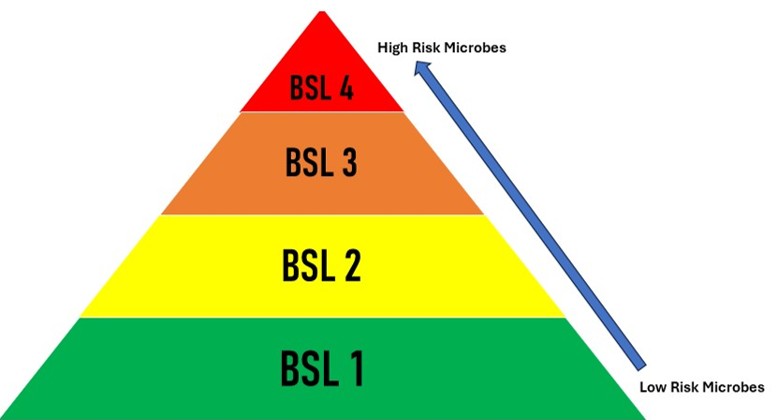
What is Containment Level 4?
Containment levels describe the precautions, facility design and operating practices required to safely work with different pathogens. Containment levels range from CL1 to CL4 based on the risks associated with the pathogens being studied. As the level increases, so do the facility design, equipment, procedures and training required to protect employees, the community and the environment.
CL4 is the highest level of containment. These specialized facilities allow scientists to safely study pathogens that can cause serious or life-threatening disease and for which vaccines or treatments may be limited or unavailable.
Why build it in Saskatoon?
Saskatchewan has been home to infectious disease and vaccine research at VIDO for more than 50 years. Adding a CL4 facility builds on decades of expertise and specialized research infrastructure developed right here on the Prairies, including VIDO’s existing research, animal and vaccine manufacturing capabilities.
It also brings new opportunities to Saskatchewan through continued investment in specialized infrastructure, highly skilled jobs and training, while attracting leading researchers to Saskatoon and supporting Saskatchewan’s Research Strategy. It positions Saskatchewan to contribute even more to protecting human and animal health and advancing infectious disease research in Canada and around the world.
What does it mean for Canada?
CL4 facilities give researchers the ability to safely study the full range of infectious diseases that affect the world. Combined with VIDO’s existing capabilities, researchers can work from understanding a new pathogen through to developing and evaluating vaccines, treatments and other medical countermeasures, regardless of the level of containment required. With vaccine manufacturing also available at VIDO, these capabilities create an integrated continuum from discovery through development and manufacturing.
Just as importantly, Canada will have specialists trained and ready before an emergency happens. With a state-of-the-art CL4 facility, scientists can gain experience working safely in CL4 now, building expertise that can be called on when a new infectious disease or biological threat emerges.
This capacity will help Canada respond faster to future threats, protect lives and animal health, and reduce impacts on food security and the economy. It also strengthens Canada’s health security, and biological defence capabilities, supporting national priorities including Canada’s Biomanufacturing and Life Sciences Strategy and the Defence Industrial Strategy.
Safety and security come first
Working safely and securely with pathogens is fundamental to everything VIDO does.
VIDO’s CL4 facilities are designed, built and will operate to meet Canada’s rigorous biosafety and biosecurity requirements. These requirements extend beyond the laboratory and include specialized facility systems designed to keep pathogens contained, equipment and procedures, extensive training and security measures.
Before any CL4 research can begin, the facilities must meet federal requirements for the safe and secure handling of pathogens and toxins.
Who oversees this work?
VIDO does not set its own standards for high-containment research. In Canada, facilities working with regulated pathogens and toxins must meet federal requirements, including the Canadian Biosafety Standard and its new Biosecurity Addendum. VIDO’s work is subject to regulatory oversight by the Public Health Agency of Canada and, for animal pathogens, the Canadian Food Inspection Agency.
There is also a local avenue for questions and discussion. VIDO’s Community Liaison Committee brings together community members and VIDO representatives to share information and discuss topics related to VIDO’s work and facilities. Saskatoon and area residents are encouraged to ask questions directly or raise them through the committee.
Have more questions?
We welcome questions about VIDO, our facilities and the research happening here in Saskatoon. Contact us directly at info@vido.org or connect with VIDO’s Community Liaison Committee by email at vidoclc@usask.ca to learn more or raise a question.